

Editor’s note from EVEC: the article below was written by young participants in an Erasmus+ activity and is published in their own English. It is a short piece of youth writing about zoos and animal welfare, kept here as a record of what they made of the question. We have corrected only three places where a word was mistyped or a phrase was garbled enough to obscure the meaning, and added one bracketed note where a factual claim needed correcting; their non-native phrasing is otherwise untouched, because it is theirs. The headings, the links and the sections after the article are ours.
Zoos and animal welfare, argued by young Erasmus+ participants
The word zoo comes from the Greek word “zoon”, which means “animal”. It’s a facility that housed animals in enclosures, displayed to public, in order to conserve the endangered species, to provide zoological education but also to entertain the visitors and make profit. During the 19th century, zoological parks used to symbolize the royal power. Later, in 1970’s, when ecology started to emerge and flourish, zoos started to reconsider their roles.
Many large zoos stopped having animals perform tricks for the visitors and take advantage of them. Detroit zoological garden, for example, stopped its elephant show in 1969 and chimpanzee show in 1983, acknowledging that trainers sometimes abuse animals to get them to perform.
The last years there are different opinions about zoos. On the one hand, some people consider the menageries as a great opportunity for people. On the other hand, some others believe they are just a nightmare for the animals which live enclosed there.

The case for zoos: education, conservation, research
First of all, there is a belief that zoos give us all the opportunity to come in contact, meet and know things about animals we cannot find out in nature, either because they are dangerous (such as lions) or extinct (pandas). [EVEC note: giant pandas are not extinct. The IUCN reclassified the giant panda from Endangered to Vulnerable in 2016.] For some people, zoological parks are a big chance to conserve and protect endangered animals. Also, it allows scientist and zoologists to find animals, living in enclosures that attempt to replace their natural habitat and behavioral patterns, and “use” them for research purposes. So, many can say that sometimes zoos can provide education to public, inspiration and research source to experts.

The case against: a cage is not a habitat
But we have to consider that the enclosures are trying to provide animals with a habitat similar to their natural, but living in a cage and not in nature may cause big problems to them and change their behavior as well. About the wild ones, which are endangered, zoological gardens are problems, not a solution. The only way to really save them is to protect them in their own natural habitats.
We must keep in mind that zoos began as amusements, where animals were abused in order to perform in front of the visitors and was exploited to make money. Although things have changed a little bit, animals in menageries are still caged, used as exhibits and zoos are still making profit taking advantage of them.
What the participants concluded about zoos and animal welfare
In conclusion, it’s true that zoological gardens may sometimes offer education, inspiration and a big source for research purposes. However, in our opinion, every animal on the planet have the right to live free in nature and be protected in their own natural habitats.
People and wildlife both shares the same space, the same environment sometimes, they suffer from the same problems, such as pollution, deforestation or even climate change, problems that have to do with the destruction of the natural world and have a really bad impact on everyone. So, both people and animals have to live free, near the nature and cohabit in order to survive.
Zoos and animal welfare: what the European rules actually say
The rest of this page is EVEC’s, not the participants’. Their article is an opinion piece rather than a legal briefing, and it is worth setting beside the framework that already exists, because zoos and animal welfare is also a matter of European law. Since 1999 the European Union has regulated zoos through the Zoos Directive (Council Directive 1999/22/EC). It requires member states to licence and inspect zoos, and it obliges zoos to take part in conservation research, training or breeding programmes, to promote public education about the species they exhibit and those species’ natural habitats, and to accommodate animals in conditions that aim to satisfy the biological and conservation requirements of the individual species.
That directive does not settle the zoos and animal welfare argument the participants are having; it defines the ground the argument is fought on. The question they raise, whether a licensed and inspected enclosure can ever stand in for a habitat, is the one that the wider European position on animals as sentient beings keeps running into. The European Commission’s animal welfare pages are the place to follow how that position develops.
Two claims about zoos and animal welfare worth a second look
The participants reach for the Detroit zoological garden as evidence that zoos reformed themselves: the elephant show ended in 1969, the chimpanzee show in 1983, and the reason they give is that trainers sometimes abuse animals to get them to perform. It is a fair example, and it is worth being precise about what it shows. It shows one institution deciding that a particular practice could not be defended, and stopping it.
It does not show that the underlying question was answered. An animal that no longer performs is still an animal that is kept, still displayed, and still part of an operation the participants say makes a profit from it. Read closely, the example strengthens their case rather than softening it, which is not what a reader expects a reform story to do.
The second claim needed correcting outright, and we corrected it in brackets rather than quietly: pandas are not extinct. We left the mistake visible because deleting it would have hidden something useful. The sentence it sits in carries the strongest version of the case for zoos, that they let you meet animals you could never meet otherwise, either because the animal is dangerous or because it is gone. That case rests on scarcity, and scarcity is the detail people are most likely to get wrong.
A reader who watches an argument wobble on a factual point learns more about zoos and animal welfare than a reader handed a tidy paragraph. Neither correction moves where the participants end up. They still conclude that every animal has the right to live free in nature, and the two supports under that conclusion, that a cage changes an animal’s behaviour and that endangered species are only really saved in their own habitats, are untouched by either point.
Why zoos and animal welfare belongs in non-formal education
The subject earns its place in non-formal education precisely because it does not resolve. Conservation against captivity, education against profit, the animal you can finally see against the habitat it was taken from: every branch of it has a defensible answer on both sides. A young person who has to hold two of those positions at once, and then say where they stand and why, has done something harder and more useful than being handed a conclusion.
The article’s own structure shows why. It moves through education, then conservation, then research, and only then arrives at the cage. Each of those first three answers is easier to defend than the one that follows it, so the hardest part of the case comes last rather than first. Working through a text built that way is different from being told what the two positions on zoos and animal welfare are. The order is part of the content.
It is also why the sections after the article are kept clearly separate from it. The participants’ text is one thing and EVEC’s commentary is another, and a reader should be able to tell at a glance which is which. Merging the two would make the page read more evenly and tell the reader less.
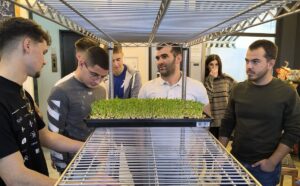
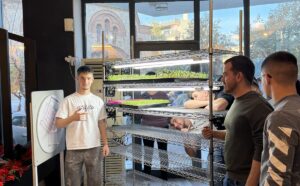
That is also why the article is published almost unedited. Correcting a participant’s English would make the page tidier and the writing less theirs, and what these young people have to say about zoos and animal welfare is worth more in their own words than in ours. The same reflex runs through the rest of our youth work and through the hands-on methodologies we build around it, from microgreens and mycelium to solar energy: start from something concrete you can see and touch, and let the larger argument follow.
Take part in the next project
If you want to end up arguing about zoos and animal welfare, or anything else, in your own published words, there are several ways in. The online Volunteer Academy is free for everyone, including under-18s, and runs entirely online. Local volunteering in Athens, online volunteering and European Solidarity Corps placements each have their own page, and Get Involved is the place to start. The programme itself is explained on the official Erasmus+ portal.
Two things worth knowing before you apply. If a call on this site still carries an Open Call tag, it is open on purpose: EVEC leaves calls open until the right volunteer applies, rather than closing them on a date. And we do not set how long a mobility lasts. The Erasmus+ rules for the Key Action and the grant agreement decide that, not us.
Questions are welcome, including awkward ones. Write through the contact page and you will have a reply within a maximum of two working days, or come to the office at Polifimou 17, Zografou, which is open every working day from 09:00 to 16:00. More youth writing and project news is collected on the EVEC news page.
One short article by a group of young participants will not settle the zoos and animal welfare debate. What it does is record what they made of it, in their own words, which is the whole reason it is still on this site.